Tra le linee aims to affirm the power of an encounter in which choreography and music dialogue between density and emptiness, between appearances and escapes. On stage, five dancers and a string quartet compose an architecture of physicality, between dance and sound, which unfolds on the dimension of the limit.
In the choreographic progression as well as in the musical structure, from Beethoven’s Grande Fuga, through Riccardo Perugini’s electronic weaving to Rihm’s intermittency, the limit appears as an experience of trespassing, of freedom, but also of vulnerability, which mobilizes the perspectives of agreement and relationship between bodies, evoking scenarios of disturbance in the relationship between the subject and the community.
The changing and contrasting texture of the actions gives rise to new opportunities for listening and oxygenating distances, to emphasize, in the contingency of bodies, an energetic proximity that changes its forms into a common pneuma and breath.
In dance, limits appear as soft lines, rubber walls, connective tissues, stretched and suspended skins, testifying to the multiple degrees of inclination and destabilization of postures, of orderly verticality, like rolling, cracked, overturned… smeared statues.
The individual gesture gains power in the collective effort, drawing on a common vocabulary of past and contemporary iconography that disrupts perspectives between scenes of celebration and protest, finding in Beethoven the most stubborn and contrasting nature of affirmation.
The encounter demands precision, the kind of precision that surprises a moment before it is understood. And it seems to emerge from the invisible. Between the lines, in fact.
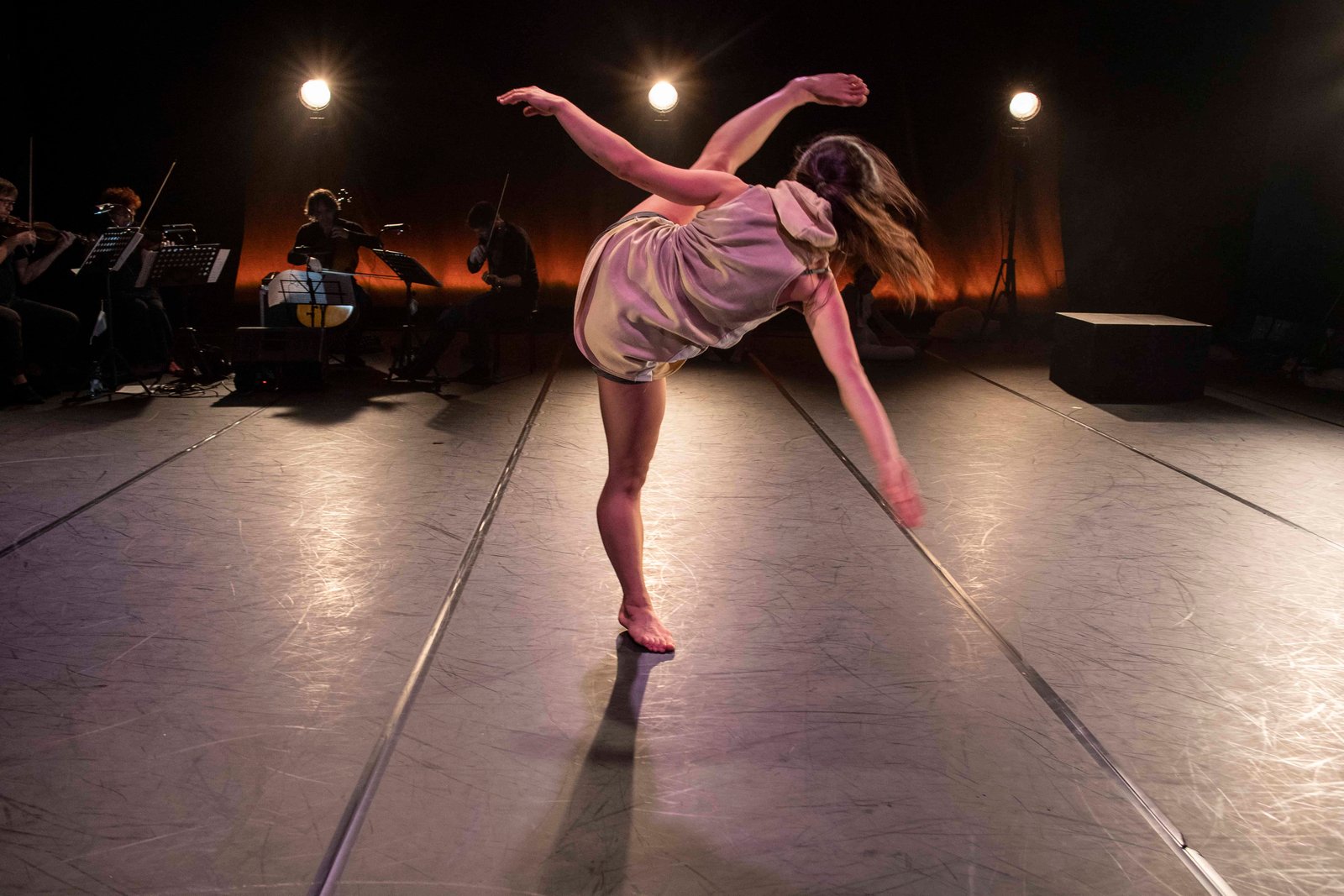
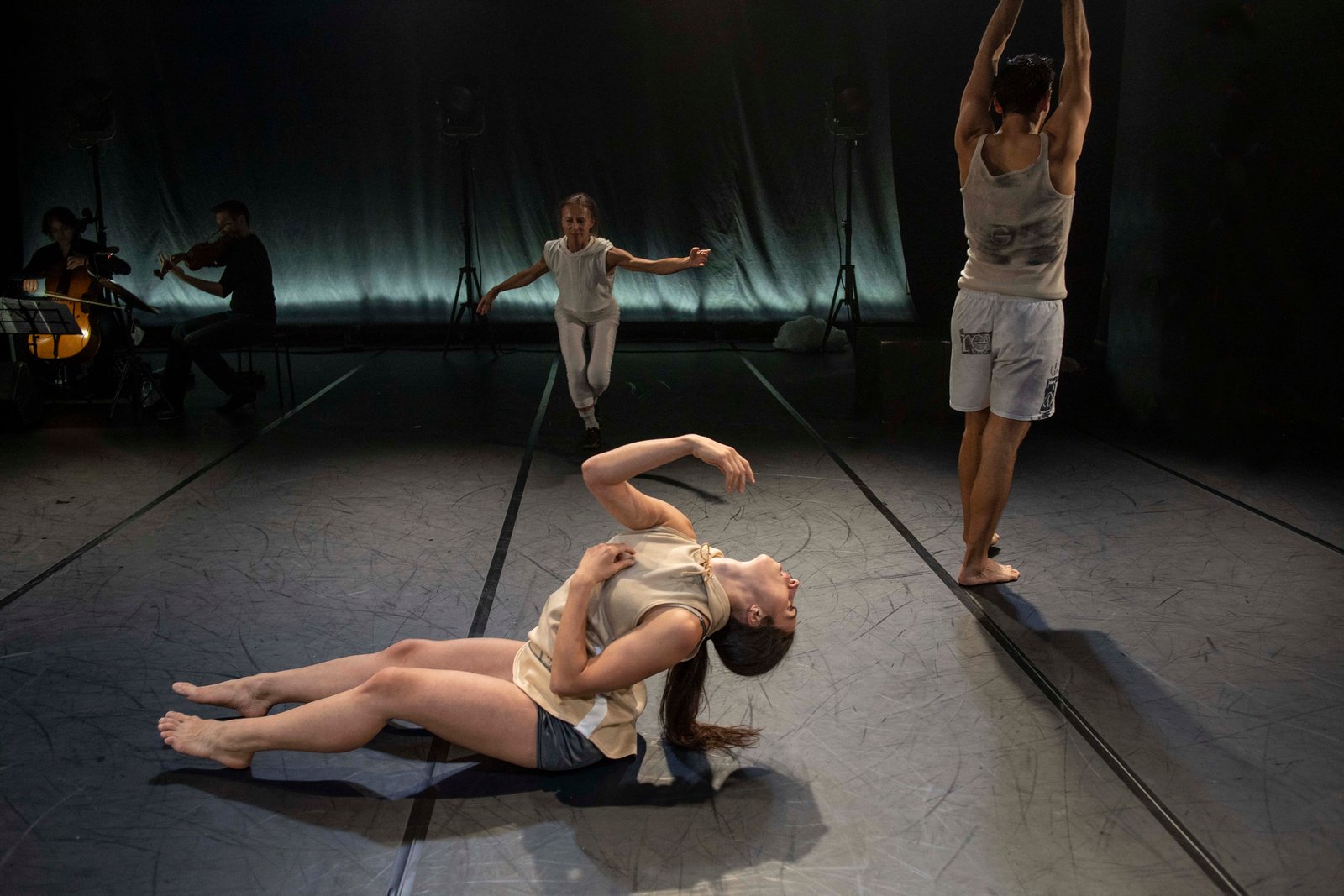
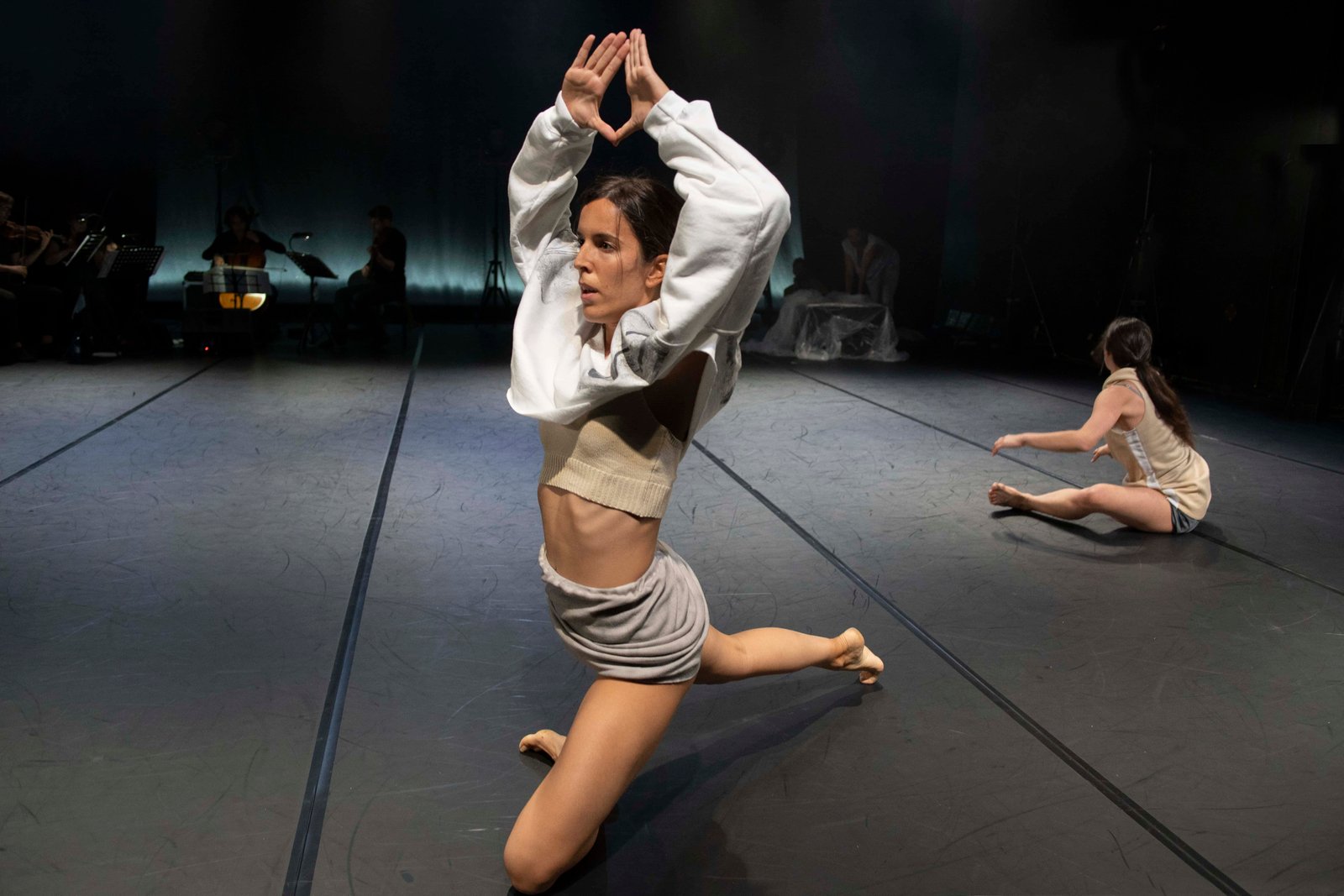
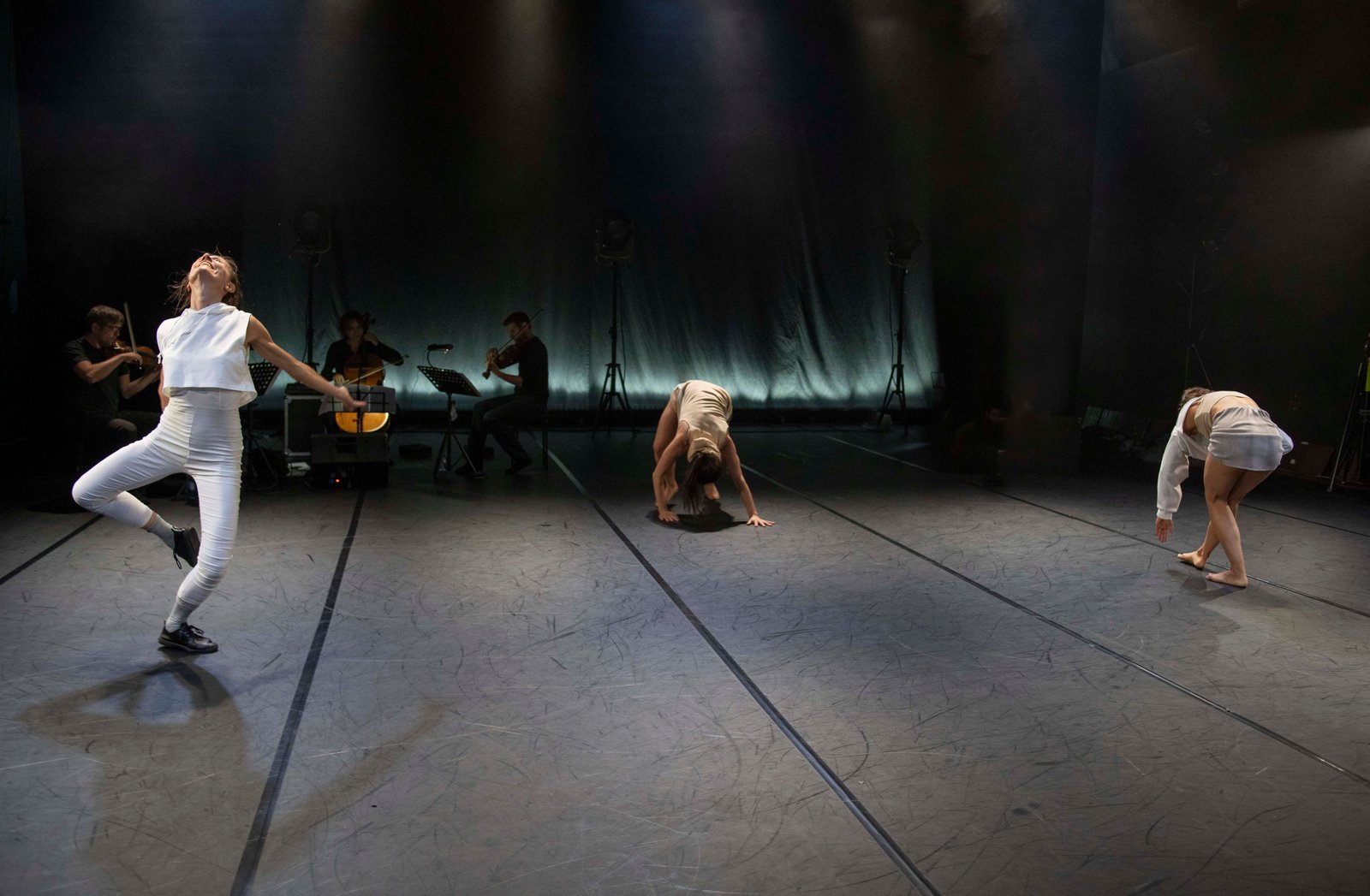
Tra le linee aims to affirm the power of an encounter in which choreography and music dialogue between density and emptiness, between appearances and escapes. On stage, five dancers and a string quartet compose an architecture of physicality, between dance and sound, which unfolds on the dimension of the limit.
In the choreographic progression as well as in the musical structure, from Beethoven’s Grande Fuga, through Riccardo Perugini’s electronic weaving to Rihm’s intermittency, the limit appears as an experience of trespassing, of freedom, but also of vulnerability, which mobilizes the perspectives of agreement and relationship between bodies, evoking scenarios of disturbance in the relationship between the subject and the community.
The changing and contrasting texture of the actions gives rise to new opportunities for listening and oxygenating distances, to emphasize, in the contingency of bodies, an energetic proximity that changes its forms into a common pneuma and breath.
In dance, limits appear as soft lines, rubber walls, connective tissues, stretched and suspended skins, testifying to the multiple degrees of inclination and destabilization of postures, of orderly verticality, like rolling, cracked, overturned… smeared statues.
The individual gesture gains power in the collective effort, drawing on a common vocabulary of past and contemporary iconography that disrupts perspectives between scenes of celebration and protest, finding in Beethoven the most stubborn and contrasting nature of affirmation.
The encounter demands precision, the kind of precision that surprises a moment before it is understood. And it seems to emerge from the invisible. Between the lines, in fact.